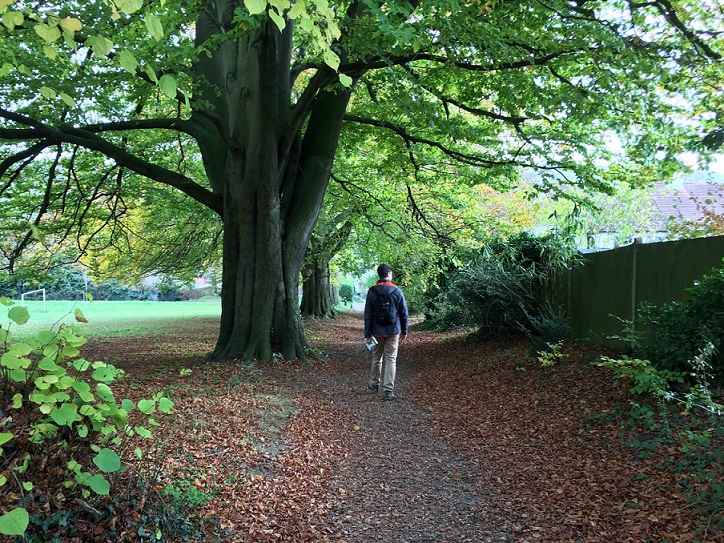
Sunday 4th November 2018
We arrived at Victoria station sufficiently early on a Sunday that the coffee shop’s coffee machine hadn’t yet heated enough for us to get any caffeine for the journey. So it was, sans coffee and with my face still sporting a long pillow crease from the lovely deep sleep I was enjoying when my hiking alarm went off, we blearily caught the 9.25am train to Otford.
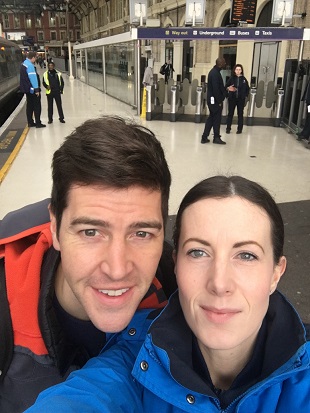
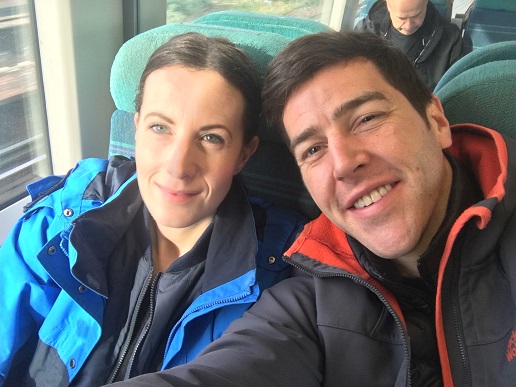
In just over half an hour we were far from the city smog and feeling perkier as we alighted in bright sunshine at the rather sweet little Otford station.
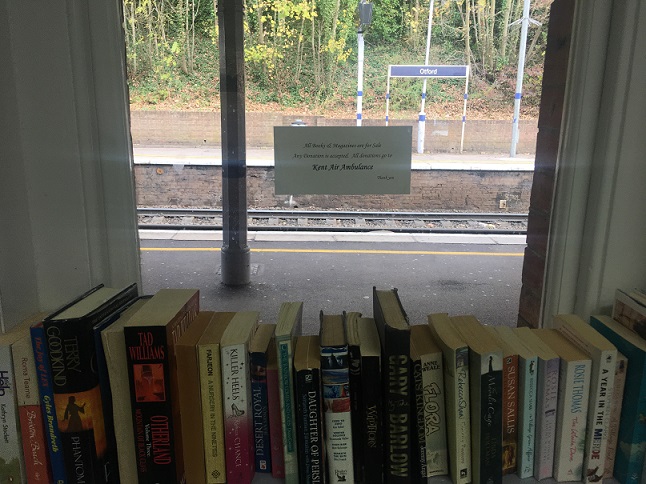
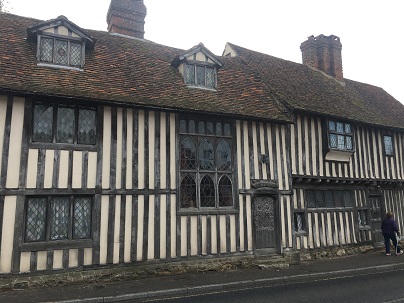
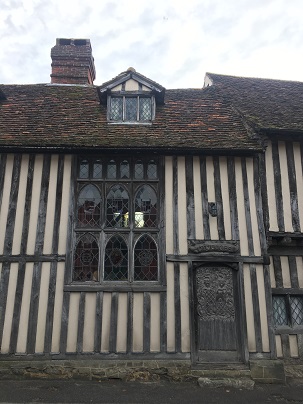
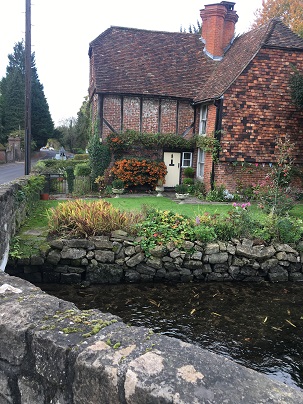
You don’t have to wander far into the village to quickly get a good idea of life in Otford: (1) the station office has an honesty-box second hand book sale to raise money for the local air ambulance, (2) in the centre of a roundabout next to the station is Britain’s smallest listed building – a duck house in the middle of a pond, from which a badling of ducks have free rein to wreak havoc on the local traffic, (3) the village is full of charming higgledy piggledy medieval buildings, (4) across a community sports field busy with Sunday league games is a giant scale model of the solar system, commissioned by Otford Parish Council (more on this later). The feel of the place is very different to the Missendens of the last walk, and you definitely get a sense of community spirit.


Much to Nick’s* delight, no doubt, we almost immediately encounter an old church, St Bartholomew’s Church. But, of course, it was 10.30 on a Sunday morning so, unless we fancied sitting through a church service (and missing our lunch reservation), we weren’t going to see the church’s memorials to Cromwell’s great-grandsons. Given our Irish ancestry, neither of us felt this a great loss. Construction of the church began in 1060, so it’s pretty blummin old. (*If you’re wondering who Nick is, see my last blog post).


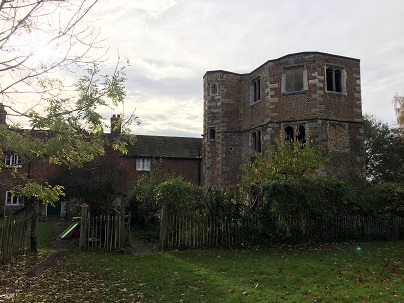
“Otford goes back to the sixth century when the Anglo-Saxons called their settlement Ottanford (Otta’s Ford). The Archbishop’s Palace in Otford, the remaining fragments of which are on open view, once rivalled Hampton Court for splendour, until Henry VIII forced Archbishop Cranmer to surrender it in 1537.”
A visit to Otford Palace is noted as an optional diversion, but Nick’s history lesson had sold it to us, so divert we did. And swiftly found out why it was optional. Much of the formerly grand palace no longer exists and has been replaced with a row of boring terraced houses.


So we headed back the way we came, and back on track with Nick’s directions. 15 minutes later we realised we were about to leave the village and hadn’t yet found the solar system I’d seen flagged as a feature on google maps, which is mentioned very briefly in the book. We had to resort to checking the online version of the walk on walkingclub.org.uk, and after spending a few minutes comparing the two, we realised the route had changed so much over the last decade or so that, on this occasion, we were going to have to abandon Nick and turn to the modern online guide.


Once again doing an about-turn, we discovered the solar system across the local sports pitch (we took the long way round to avoid accidentally featuring in any games). The Otford Solar System is “the only one of its kind on the planet” and the largest scale model in the world. The sun and each planet are represented by concrete pillars, and our walk would eventually take us to Neptune and Pluto before we left the galaxy.


By this time, my husband was getting a bit fed up of diversions and me stopping every 5 minutes to take photos, and suggested we hurry up and actually start this walk. This was the first indicator that, actually, lots of interesting landmarks and things to see on a walk isn’t all that conducive to actually having a good walk (or a short and snappy blog…)
So we tramp on at speed, whizzing past Pickmoss House, a medieval open-hall house, and the 18th century Broughton Manor, to turn right at Neptune into a field and away from the village.
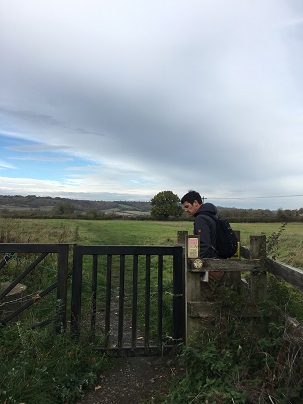
“In 400 metres the path goes through a hedge and across a ditch, then through a metal squeeze stile.”
Casually mentioned as if it’s a normal thing. Here’s the squeeze stile in action.


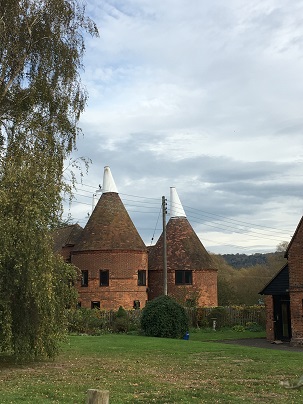
All is going well until we somehow manage to turn right too soon and that’s how we end up passing Pluto instead of Sepham Farm and its oasthouses, which we could see in the distance.


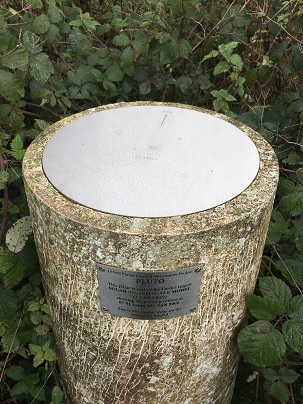


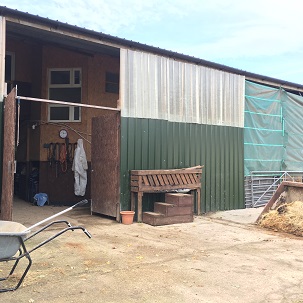
It’s just 2 different sides of a square route, however, so we end up where we’re meant to be at Filston Farm, which has a bit of a sinister Breaking Bad vibe. We realised neither of us knew much about oast houses, so we decided to look up the history of the buildings later on.
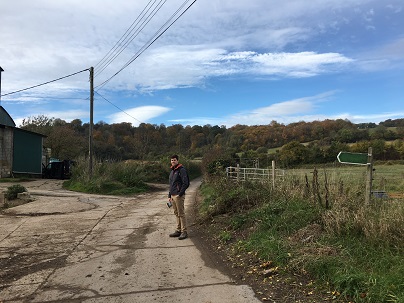
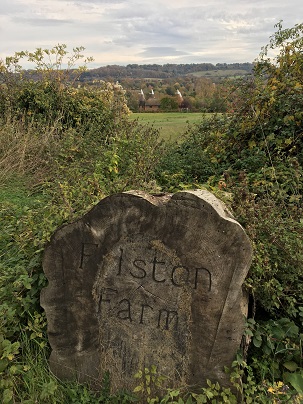
From here it was up, up, up, past friendly groups of Sunday walkers (sensibly doing a downhill version of our walk).
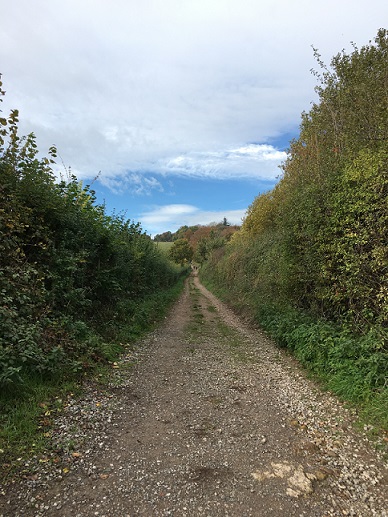
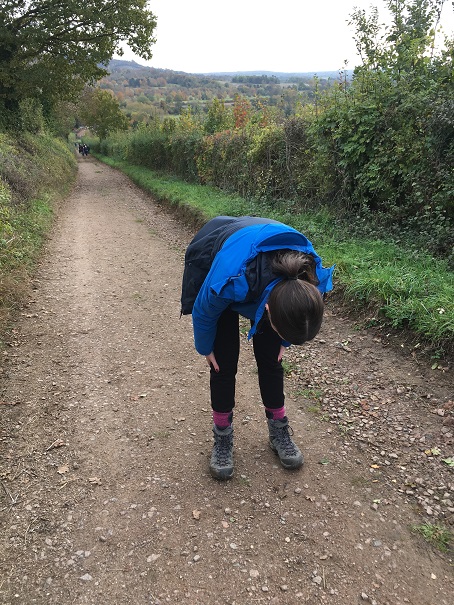
I did an over zealous exercise class on Friday night, followed by a day of high heels wearing at a christening on Saturday, so my hamstrings were quite literally twanging as I tried to keep up a good pace up the hill.
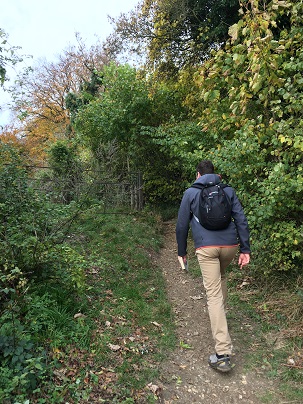
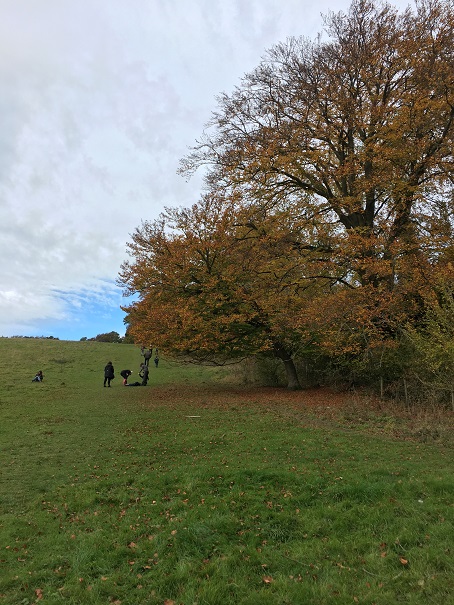
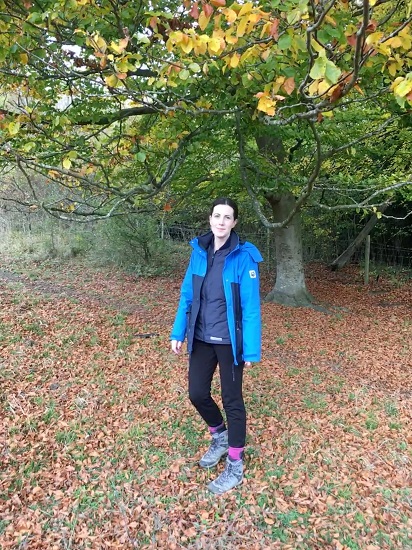
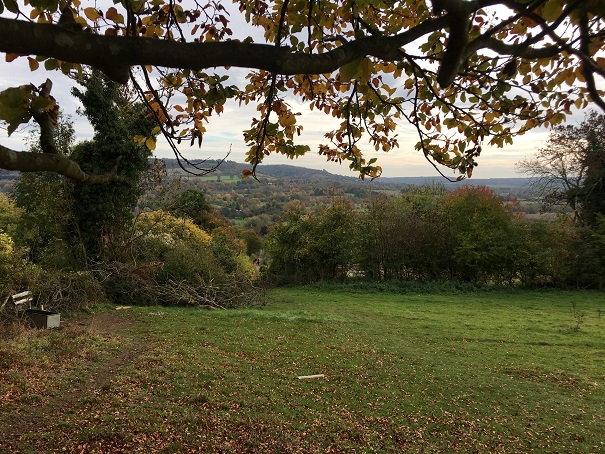
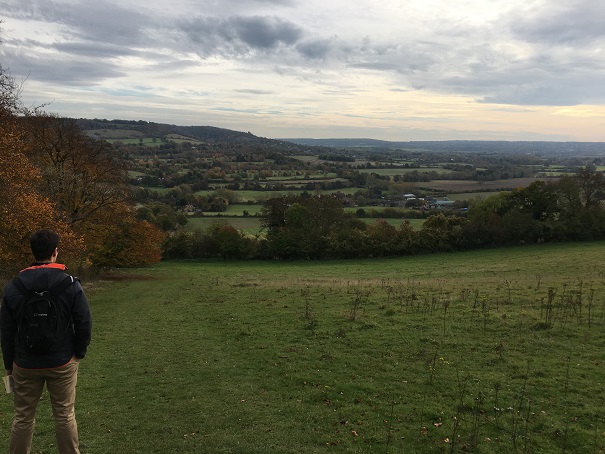
We remembered to look back occasionally to see the Autumn colours and distant mist over the Darent valley.
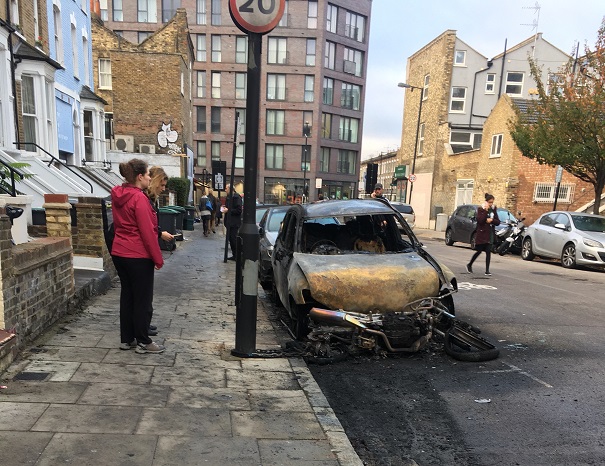
Earlier in the week a gang of men had set fire to a car and a motorbike on the street where we live – I passed the burnt out shell and spoke to the devastated owner of the car on my commute to work. Tramping through the crispy leaves and breathing the fresh Kent air, we felt a long way from the intensity and aggression of city life, and I remembered why these walks are worth getting up at 7am on a Sunday. Despite being crumpled and creaking.
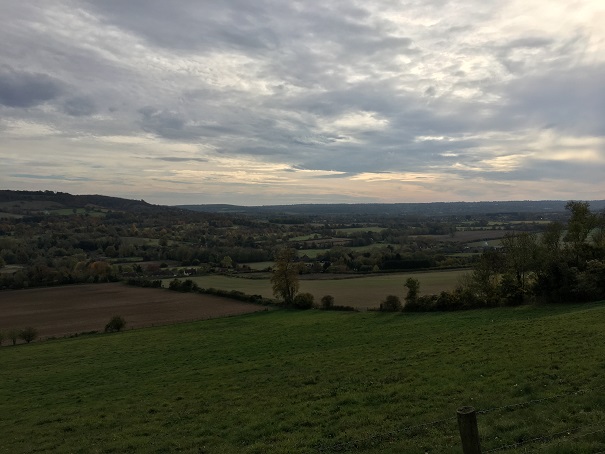
Finally at the top of the hill, we turned into Meenfield Wood and began a descent into Shoreham.
When we set off that morning it was 10 degrees colder than the last walk, so I’d opted for 6 layers of clothes and a pair of gloves. The hills had warmed us up, and as the walk went on it became a bit of a strip-walk, with only 2 layers left by the time we arrived in Shoreham for lunch. It’s probably just as well we stopped when we did.
We passed a gaggle of people heading into Shoreham’s Battle of Britain museum, which was decked out ready for Remembrance Day. We decided they wouldn’t appreciate our muddy boots, so we went in search of The Kings Arms, our lunch stop.


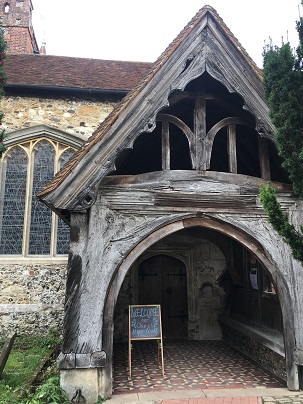
We arrived there at 11.55, before its opening time and far too early for our 12.30 booking. So I took a snap of the last Ostler box in the country, and we ambled on and found the Church of St Peter and St Paul.


Hurrah! The church service had finished and the friendly vicar beckoned us in, muddy boots and all. This church has “an outstanding wooden rood screen spanning the width of the building and a stained glass window by the Pre-Raphelite artist Burne-Jones”.
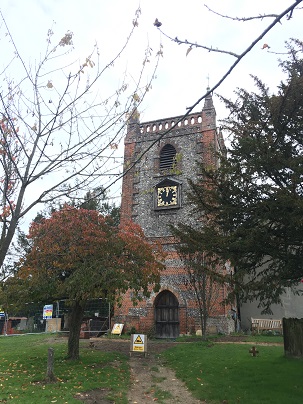
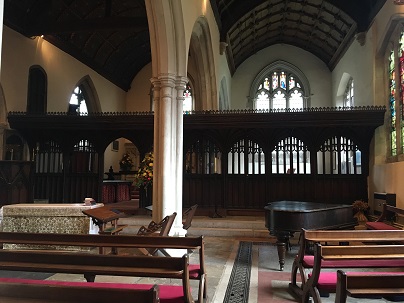
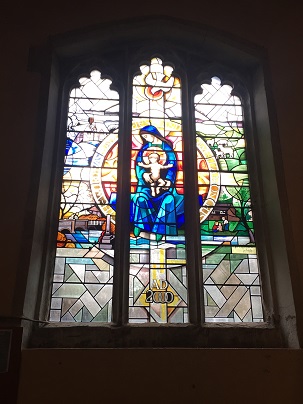
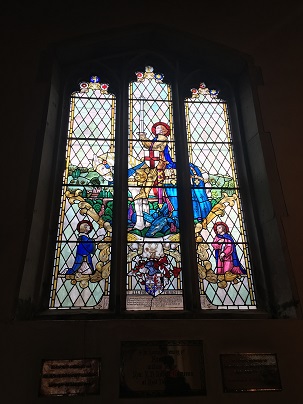
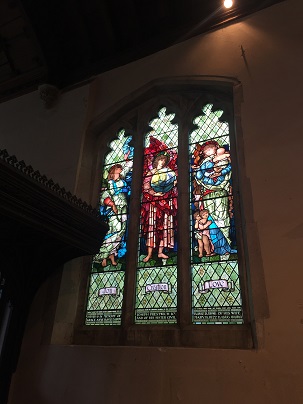
Perhaps someone better versed in the Pre-Raphelites can tell me which of these three windows is the special one? (my guess is the last one)
Back to The Kings Arms and lunch was so much better than at our last walk-pub! Full and happy we set off for Eynsford.


A nice walk along the riverbank before more uphill climbing, then an avenue of old beech trees right out of a Hockney painting (I know, wrong county).
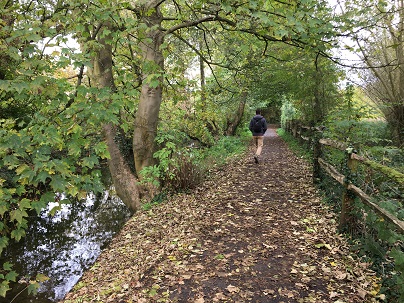
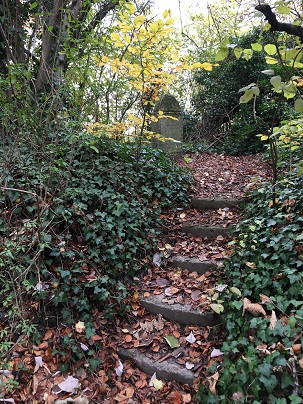
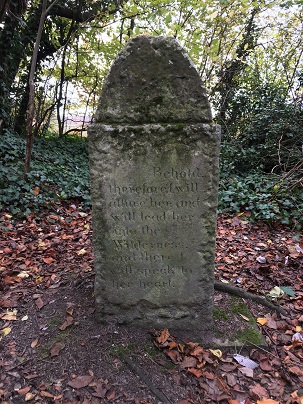
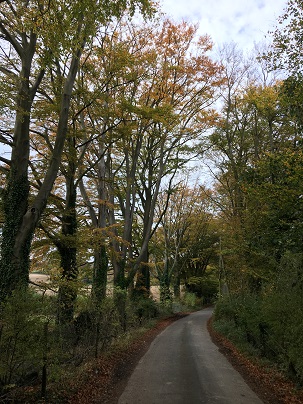
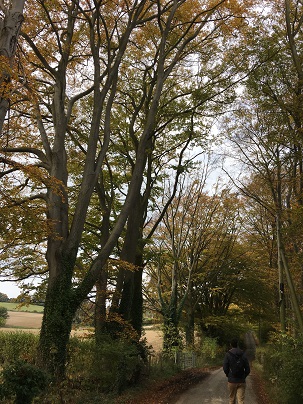
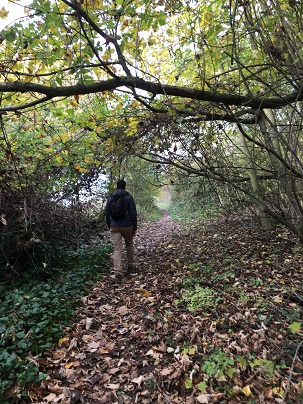
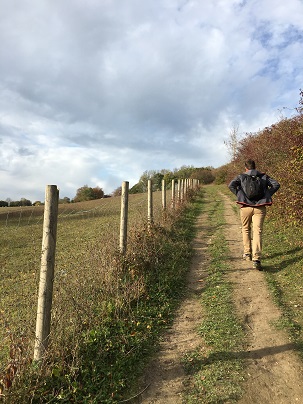
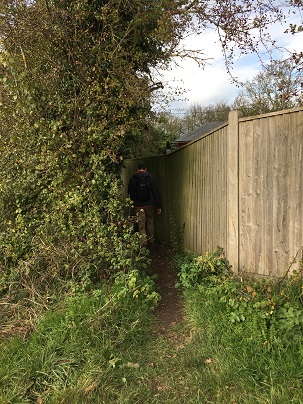
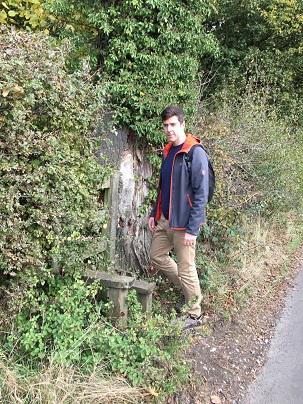
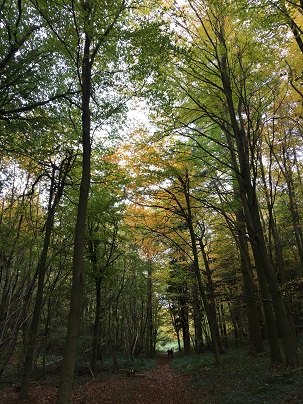
Perhaps you’re wondering if we got ourselves a compass after getting quite lost on the last walk? Well, mum managed to track down dad’s old compass for us. So, you could say dad’s helping me find my way, which I rather like the idea of. Every time I took out the compass to check directions, I thought of dad and how pleased he’d be that I’m out hiking again.
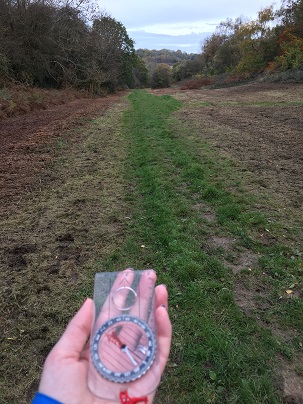
The path then abruptly ended at a golf course with a suggestion to carefully cross the fairway. Now, anyone who knows me and my husband will be aware we are not known for being very lucky. Deciding it’s best not to tempt fate, we added yet another diversion, through the woodland around the back of the fairway. The first thing we see when we emerge from the woods is a sign warning us about snakes. Who knew the walk would be so potentially treacherous?
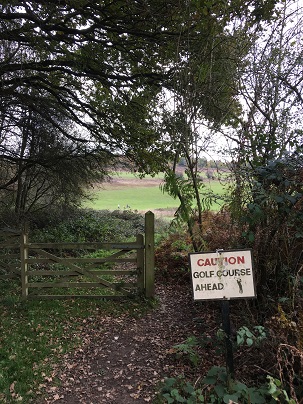
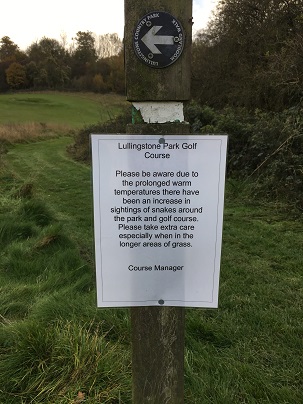
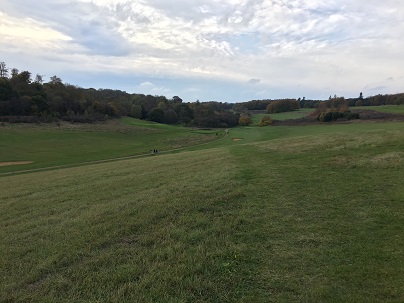
I’d been looking forward to walking through Lullingstone Country Park, but frankly I found it quite disappointing. Apparently Yorkshire has spoiled me. The visitors centre was a bit of a let down too – it seems to cater mainly for the very young and the more-seasoned folk; a canteen with moulded plastic chairs. It’s clearly a popular place, but we didn’t feel enticed to stay for the cup of tea and slice of cake we’d planned to have.
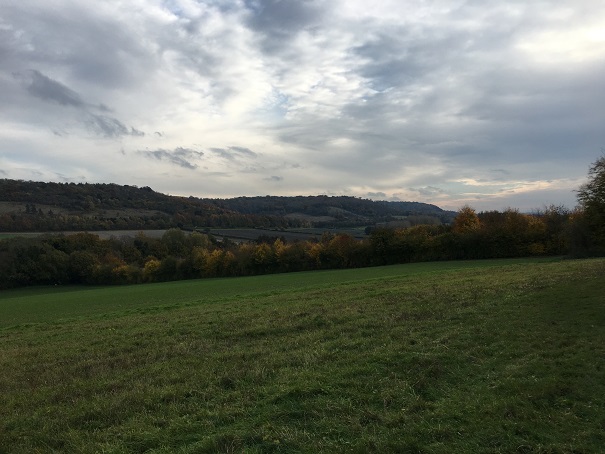
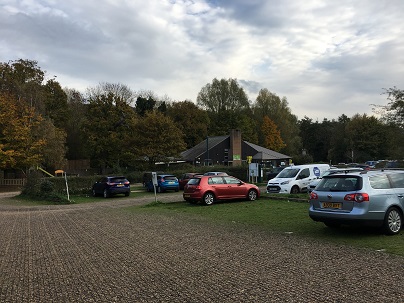
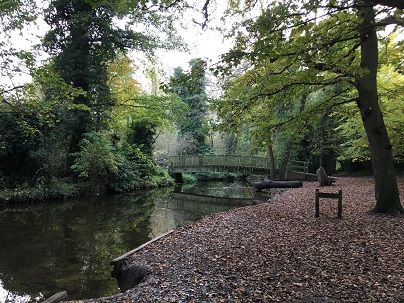
Excitingly, the walk then took us to a proper castle, Lullingstone Castle, which also has a world garden, showcasing flowers from around the world. Sadly the castle was inexplicably shut, and in the time we loitered there, quite a few despondent travellers arrived to stare at the chain across the entrance before wandering away.


But not to worry, because next on the walk-of-many-sights was Lullingstone Roman Villa. So we set off at a decent pace (with one eye on the already darkening sky) to look for a khaki coloured shed.
Why do we enjoy Nick’s book and try to use it rather than the up-to-date website? Well – here’s how Nick described the villa, compared to the website:
The website: “In 600 metres or so, you come to a khaki coloured large, steel clad shed on your left-hand side which houses Lullingstone Roman Villa”.
Nick: “In 600 metres or so, you come to a truly hideous green corrugated shed on your left-hand side, courtesy of English Heritage, inside of which is the Lullingstone Roman Villa. If you cannot afford the admission fee, you could try peeking in for free through any open windows round the back.”
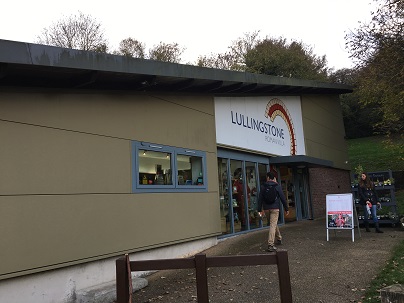
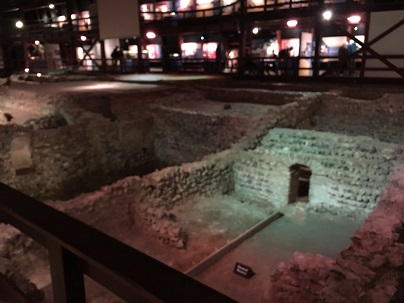
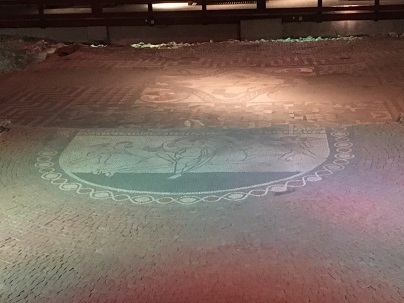
I was delighted to finally have a chance to use my English Heritage membership (there’s not much call for it in the city). The lady at reception sent us outside to stamp the mud off our boots a bit more before she’d let us in though! This blog post is already ridiculously long, so I won’t bore you with a Roman history lesson. I’ll just say – underfloor heating, a built in sauna and mosaics that have lasted since 80AD, it was a nice and informative little visit.
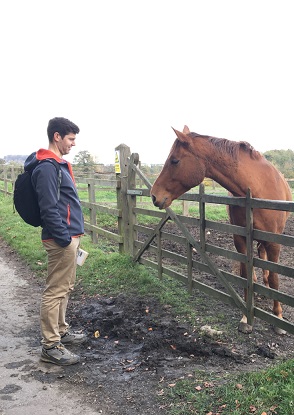
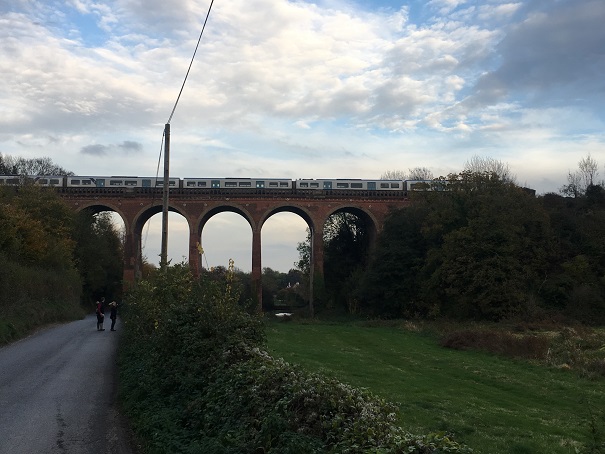
Leaving the villa, we didn’t take the optional detour to a bird of prey sanctuary, but stopped to pet some friendly horses (ignoring the sign saying they bite). We passed under a viaduct, a train whizzed over our heads, and we arrived in Eynsford.
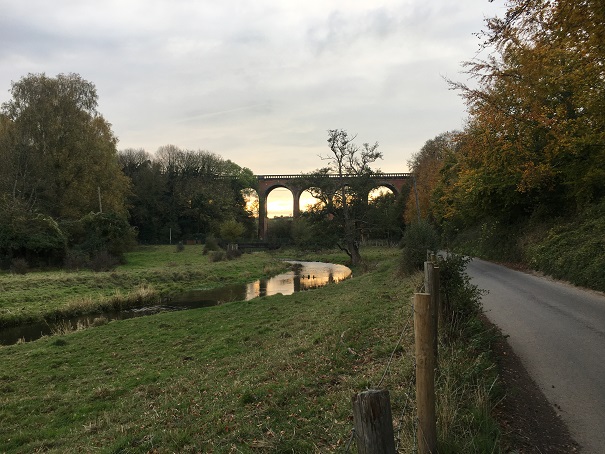
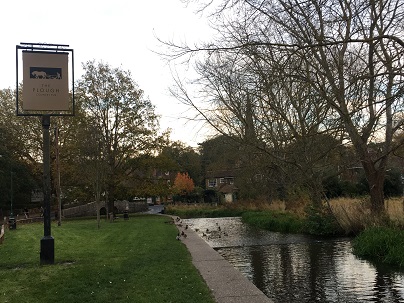
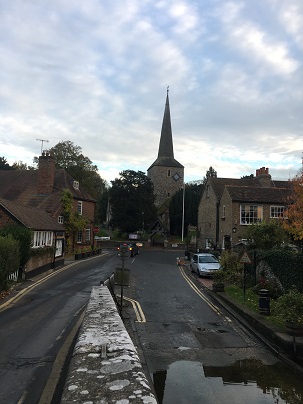
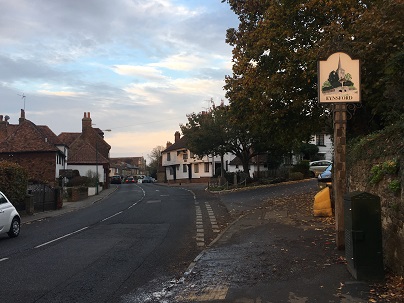
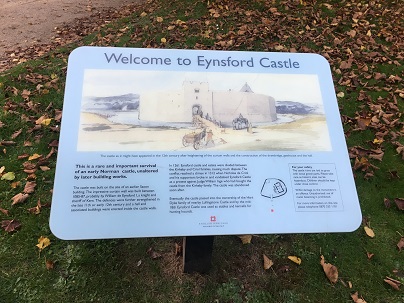
Dusk was gathering, but I wanted to see the last sight on this walk – Eynsford Castle, so we hurried down the village to find the ruins. Not much left to see, though I’m sure it’s a site with lots of history we didn’t have time to stop and read about.
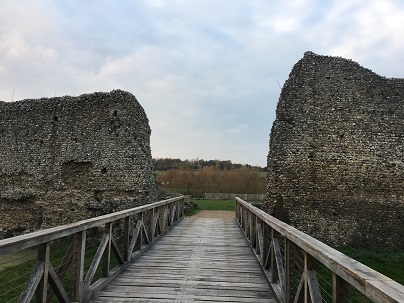
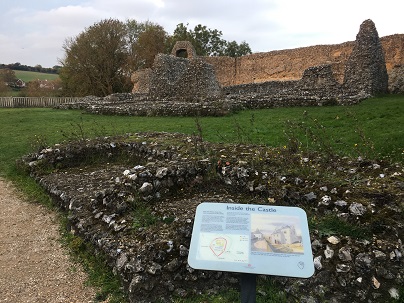
A route march back up the village to the station, and we caught the hourly London train with 90 seconds to spare! Back at Victoria by 5pm.
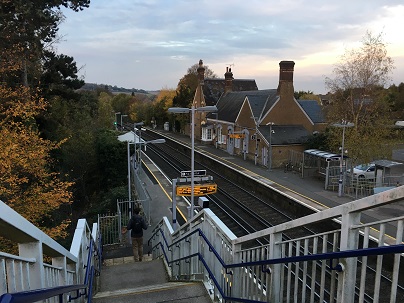
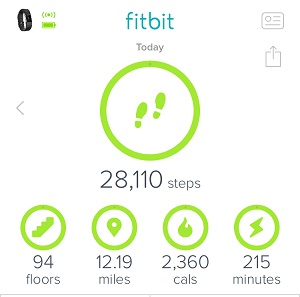
With all the detours we ended up walking about 9.8 miles – more than the book’s 8.1 miles or the website’s 8.8. My Fitbit said we climbed 94 flights of stairs, so despite being rated 5 out of 10 toughness (Nick says 6) it was actually easier than the last walk.
Best bits about the walk:
– friendly little villages
– lots to see
– good lunch
Bad bits about the walk:
– slightly boring landscape
– lots to see!
– the lunch stop came a bit too soon
 Timeout Country Walks (within easy reach of London)